
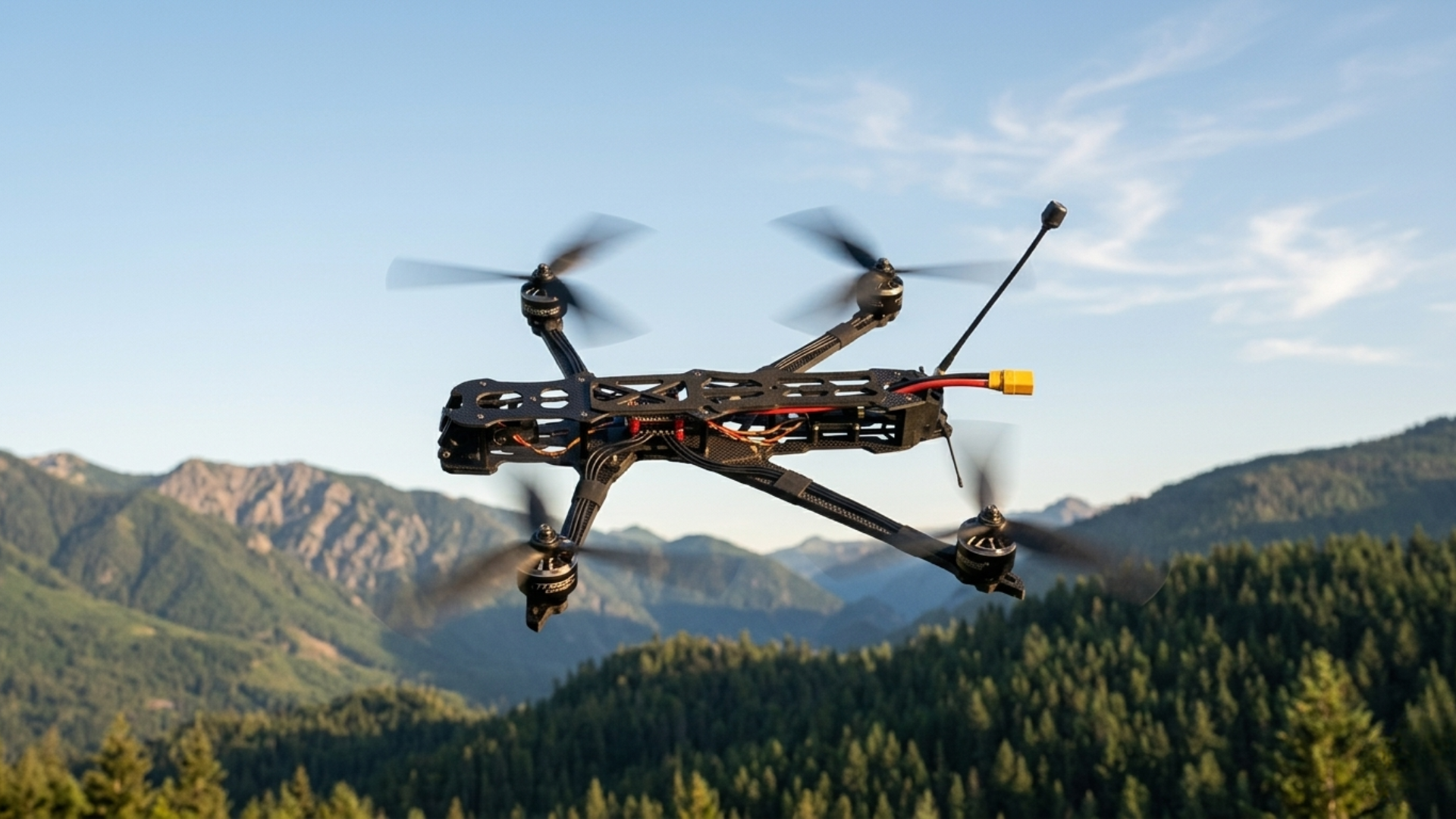
Thinking About Building Your First FPV Drone?
If you've ever watched FPV drones racing through forests, diving through buildings, or flying just inches above the ground at high speed, you've probably asked yourself one question:
Can I actually build one of these myself?
At first glance, FPV drones look extremely complex. Motors, ESCs, flight controllers, video transmitters, batteries, wiring—all of it can feel overwhelming for beginners.
But here’s the truth:
Building an FPV drone today is much easier than most people think.
With modern FPV drone kits and pre-matched components, even complete beginners can successfully build their first drone in just a few hours.
In this guide, you’ll learn:
-
Whether FPV drone building is difficult
-
What parts you actually need
-
Step-by-step assembly process
-
Common beginner mistakes
-
Whether FPV kits are worth it
Is Building an FPV Drone Difficult?
The difficulty depends on your approach.
Choosing parts individually can quickly become confusing due to compatibility issues.
Using a complete FPV drone kit, however, makes the process much more beginner-friendly.
Think of it like building a PC:
-
You assemble compatible components
-
You follow a clear guide
-
You don’t design the system yourself
Beginner Reality Check
-
Difficulty: Moderate
-
First build: 3–8 hours
-
Learning curve: Manageable
-
Success rate: High with guidance
Most beginners say:
👉 “It’s actually easier than I expected.”
A 5-inch FPV drone is the most recommended starting point.
DIY FPV Drone vs Prebuilt Drone (BNF)
Before starting your build, it's important to understand your options.
| Category | DIY Build | Prebuilt (BNF) |
| Initial Cost | Medium / High | Medium (often slightly cheaper or similar due to mass production pricing) |
| Maintenance Cost | Low | High |
| Learning Value | High | Low |
| Repair Ability | Easy | Hard |
| Setup Time | 3–8 hours | Immediate |
| Customization | Full | Limited |
What’s the best choice for beginners?
A DIY FPV drone kit is usually the best middle ground.
It gives you:
-
Pre-selected compatible parts
-
Easier assembly process
-
Lower chance of mistakes
-
Better long-term learning experience
-
Significantly lower repair cost over time
👉 Key insight: BNF may feel cheaper at first, but DIY becomes more cost-efficient once repairs and upgrades are considered.
Essential FPV Drone Components Explained
Every FPV drone is built from a few key systems:
Frame
The structural base of the drone. A 5-inch carbon fiber frame is the most common beginner choice.
Flight Controller (FC)
The brain of the drone, running firmware like Betaflight.
ESC (Electronic Speed Controller)
Controls power delivery to each motor.
Motors
Generate thrust for flight.
FPV Camera + Video System
Provides real-time video transmission.
Receiver (RX)
Connects drone to your radio transmitter (ELRS recommended).
Battery
Most modern builds use 6S LiPo batteries.

Tools You’ll Need Before Building
-
Soldering iron
-
Solder wire
-
Hex driver set
-
Wire cutters
-
Multimeter
-
Electrical tape
-
Zip ties
-
Smoke stopper (highly recommended)
A smoke stopper is especially important for your first power-up to avoid electrical damage.
Step-by-Step FPV Drone Assembly Guide
Step 1: Build the Frame
Start by assembling the carbon fiber frame.
Install arms and base plates first, but don’t fully tighten everything until alignment is correct.
Step 2: Install Motors
Attach each motor to the frame arms.
Be careful with screw length—too long can damage internal motor windings.
Step 3: Install ESC (Electronic Speed Controller)
Mount the ESC in the center of the frame.
Solder motor wires and the XT60 power connector carefully, ensuring correct polarity.
⚠️ Important professional tip: Before mounting the ESC onto the frame, solder the XT60 power cable and capacitor on your desk first.
Carbon fiber absorbs heat, which makes large solder joints harder to heat once installed. Pre-soldering ensures stronger joints and reduces the risk of cold soldering or damage.
Step 4: Install Flight Controller
Mount the flight controller above the ESC using vibration-damping pads.
Then connect it to the ESC and receiver.
Keep signal wiring clean and separated from high-power lines to reduce interference.
Step 5: Install Camera and Video System
Mount the FPV camera and video transmitter.
Ensure antennas are positioned away from carbon fiber to avoid signal loss.
Step 6: Install Battery
Secure the battery with straps and balance the center of gravity.
A well-balanced setup improves flight stability significantly.
Step 7: Configure Betaflight & First Test
Before powering on:
-
Use a smoke stopper
-
Check motor order
-
Verify motor direction (NO propellers installed)
-
Configure receiver and flight modes
Then perform a short hover test in an open area.

Common FPV Beginner Mistakes
-
Incorrect component selection
-
Wrong motor direction
-
Poor solder joints
-
Skipping safety checks
-
Installing propellers too early
-
Not using a simulator
Why Choose a FPV Drone Kit?
For beginners, a complete FPV drone kit offers major advantages:
-
Pre-matched components
-
Faster assembly
-
Reduced compatibility issues
-
Easier troubleshooting
-
Better long-term success rate
Instead of spending hours researching parts, you can focus on building and flying.
Ready to Build Your First FPV Drone?
A complete FPV drone kit is the easiest way to start your FPV journey.
🚀 Beginner Kit
⚡ Freestyle Kit
🌍 Long Range Kit
👉 Start your FPV journey today with confidence.

Frequently Asked Questions (FAQ)
Is building an FPV drone difficult for beginners?
Not really. Most beginners can complete their first build in a few hours.
How long does it take?
Usually 3–8 hours for a first build.
Do I need soldering experience?
Basic soldering is enough and easy to learn.
Is DIY cheaper than buying a prebuilt drone?
Yes in long-term cost, especially when maintenance is considered.
What size FPV drone is best for beginners?
A 5-inch drone is the best starting point.
Can I build without a kit?
Yes, but it requires more technical knowledge.
Do I need Betaflight?
Yes, for setup and tuning.
Biggest beginner mistake?
Using incompatible parts or skipping safety checks.
Is a self-built drone easier to repair?
Yes. You understand the system, so repairs are much easier and cheaper.
Share:
Why Do FPV Drones Crash So Easily? Complete Beginner Crash Prevention Guide