
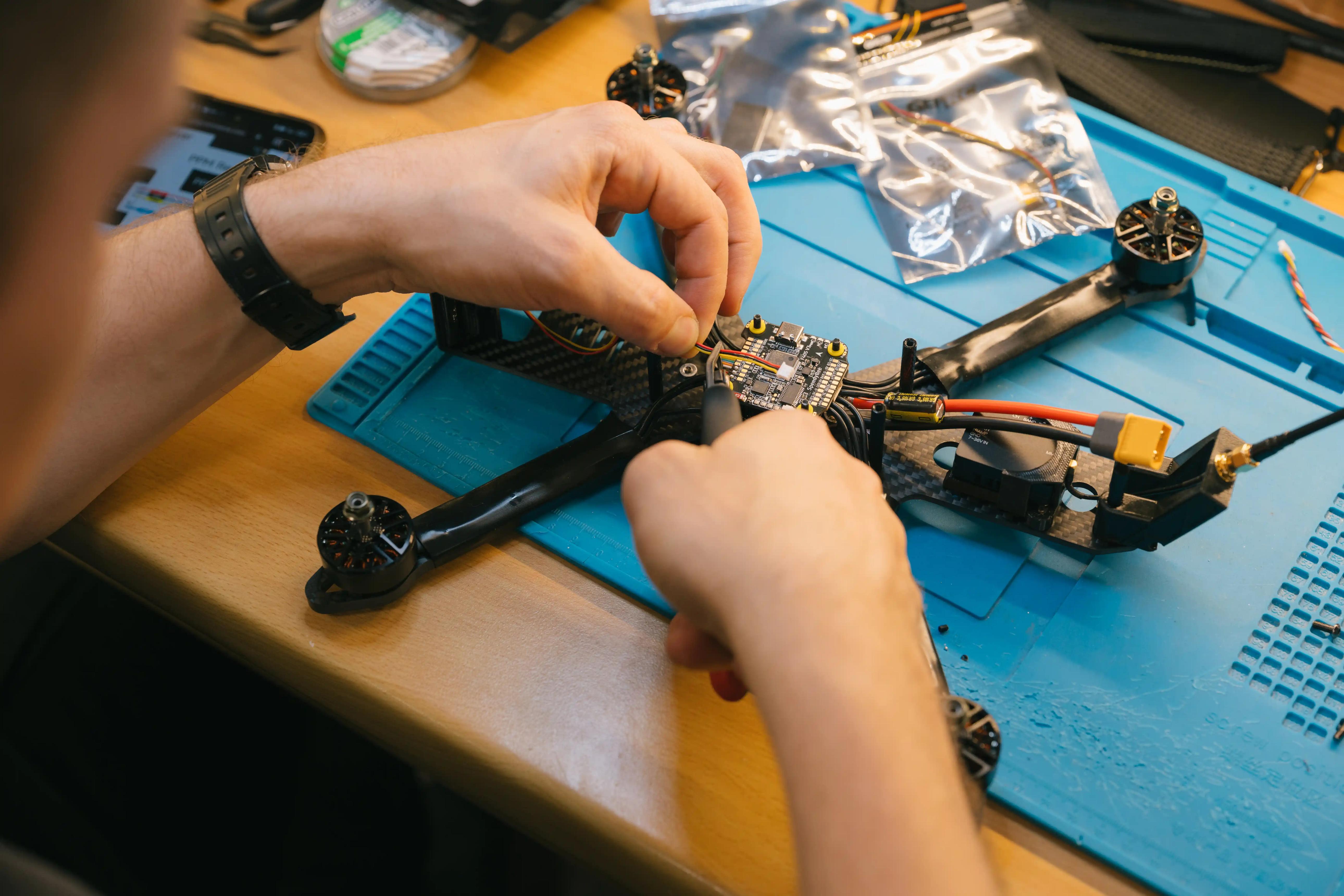
Thinking About Your First FPV Flight? Expect a Crash.
If you're preparing for your first FPV flight, there is one thing you should understand clearly:
Crashing is not an exception in FPV—it is part of the learning process.
In fact, most beginners experience at least one crash during their first sessions. The FPV community has a simple saying:
“Plan on wrecking your drone, and learn how to fix it.”
This is not meant to discourage you. Instead, it reflects a key truth: FPV drones are highly responsive, manual-control machines with very little protection against pilot errors.
But here’s the good news:
Most crashes are predictable—and preventable.
This guide explains why FPV drones crash and how to significantly reduce your crash rate from day one.
Is FPV Flying Really That Easy to Crash?
Community Consensus
| Factor | Reality |
| Beginner crash rate | Very high (often near 100% at early stage) |
| Main cause | Pilot error + setup mistakes |
| Nature of FPV | High-speed manual flight system |
| Learning model | Crash → repair → improve |
Why FPV Feels So Unforgiving
Unlike GPS drones, FPV drones:
-
Do not self-stabilize fully in Acro mode
-
Respond instantly to stick inputs
-
Amplify small mistakes at high speed
-
Require continuous manual control
👉 FPV is closer to flying a racing aircraft than a consumer drone.

Top 10 Reasons FPV Drones Crash
1.No Simulator Training (Biggest Cause)
Most beginners skip simulator practice and go straight to real flights.
✔ Fix: 10–30 hours in simulators like Liftoff or Uncrashed
2. Over-Controlling the Drone
Too aggressive stick movements cause instability.
✔ Fix: Practice smooth and slow inputs
3. Wrong Flight Mode
Using manual (Acro) mode too early leads to loss of control.
✔ Fix: Start with Angle Mode
4. Bad Flying Environment
Trees, wires, and people increase crash probability significantly.
✔ Fix: Fly in open fields (50m+ clear radius)
5. Poor Battery Management
Flying too low on battery leads to sudden drop crashes.
✔ Fix: Always keep 30% reserve
6. Failsafe Not Configured
Signal loss without recovery system causes uncontrolled flight.
✔ Fix: Enable GPS Rescue / Failsafe properly
7. Wind Underestimation
Wind above 5 m/s significantly increases crash risk.
8. GPS / Signal Interference
Urban environments and high-voltage areas reduce control reliability.
9. Incorrect Antenna Setup
Poor antenna positioning reduces video or control range.
10.Hardware Issues
Loose screws, unbalanced props, or bad solder joints cause instability.

How to Prevent FPV Crashes
3 Core Rules Every Pilot Should Follow
✔ Keep It High
Always maintain altitude for recovery space.
✔ Start Slow
Begin with gentle movements, not aggressive flying.
✔ Don’t Rush
Avoid copying advanced pilots too early.
Simulator Training (Most Important Step)
| Training Area | Recommendation |
| Time | 10–30 hours minimum |
| Focus | Hovering, landing, turns |
| Goal | Muscle memory development |
👉 Community insight: 90% of crashes come from untrained movements.
Best Practice for First Flight
Step 1: No-Prop Safety Test
Check motor direction and response.
Step 2: Low Hover Test
Stay under 1 meter altitude.
Step 3: Basic Movement
Forward, backward, slow turns.
Step 4: Gradual Expansion
Only increase complexity after stability.
Essential Pre-Flight Checklist
-
Propeller condition check
-
Motor screw tightness
-
Battery secured (double strap recommended)
-
Antenna placement correct
-
GPS signal stable
-
Beeper working
-
No electrical shorts (multimeter check)
Battery & Power Safety
-
Always leave 30% battery reserve
-
Avoid deep discharge flights
-
Warm batteries in cold weather
-
Store at proper voltage when not used
What to Do After a Crash
Step 1: Do Not Reconnect Power Immediately
Step 2: Inspect Damage
-
Motors
-
ESC
-
Frame
-
Propellers
Step 3: Repair by Modules
-
Motors → replace individually
-
ESC → replace board
-
Frame → structural repair
👉 FPV advantage: everything is modular and repairable.
How to Reduce Crash Risk Long-Term
-
Simulator training first
-
Open field flying only
-
Strict pre-flight checklist
-
Proper Betaflight setup
-
Controlled first flights
Why FPV Kits Reduce Crash Risk
For beginners, FPV kits significantly reduce failure rate:
-
Pre-matched components
-
Reduced wiring errors
-
Lower configuration mistakes
-
Higher first-flight success rate
👉 Less setup errors = fewer crashes.
Frequently Asked Questions
Why do FPV drones crash so easily?
Because they are fully manual, high-speed systems with no automatic stabilization.
Because they are fully manual, high-speed systems with no automatic stabilization.
Is crashing normal for beginners?
Yes, it is part of the learning process.
Yes, it is part of the learning process.
How many hours of simulator do I need?
At least 10–30 hours recommended.
At least 10–30 hours recommended.
What is the most common crash cause?
Pilot over-control and lack of simulator training.
Can FPV drones be repaired after crashing?
Yes, most parts are modular and replaceable.
Yes, most parts are modular and replaceable.
Share:
DIY FPV Drone Build: Is It Difficult for Beginners? A Complete Step-by-Step Guide
FPV Drone Industry Trends (2026–2027): Where FPV Is Heading Next