
Whether you're building your first FPV drone or upgrading an existing aircraft, choosing the right Electronic Speed Controller (ESC) is one of the most important decisions you can make. An ESC is responsible for converting the flight controller's throttle commands into precise motor control. A well-matched ESC improves flight performance, efficiency, and reliability, while an undersized ESC can overheat or even fail during flight.
In this guide, we'll walk through the key factors to consider when selecting the ideal ESC for your drone.

1. Match the Current Rating to Your Motor
The first specification to check is the ESC's current rating (measured in amps, A).
Every brushless motor has a maximum current draw based on its KV rating, propeller size, battery voltage, and flying style. Your ESC should comfortably handle this maximum current.
As a general rule, choose an ESC with a continuous current rating that is 20–30% higher than your motor's expected maximum current.
Example:
-
Motor maximum current: 35A
-
Recommended ESC: 45A–50A
This extra headroom helps prevent overheating during aggressive maneuvers.
2. Verify Battery Voltage Compatibility
ESCs support specific battery voltage ranges, usually indicated by the number of LiPo cells.
Common ratings include:
| Battery | ESC Support |
|---|---|
| 2S | Most ESCs |
| 3S | Most ESCs |
| 4S | Most ESCs |
| 6S | Requires a 3–6S or 4–6S ESC |
| 8S | High-voltage ESC only |
Never use a battery voltage higher than the ESC's rated limit.
3. Choose the Right ESC Size
There are two main ESC configurations:
4-in-1 ESC
A 4-in-1 ESC integrates four ESC channels onto a single PCB.
Advantages
-
Lightweight
-
Cleaner wiring
-
Easier installation
-
Ideal for FPV racing and freestyle drones
Individual ESCs
Each motor has its own ESC mounted on the drone arm.
Advantages
-
Easier maintenance
-
Better heat dissipation
-
A damaged ESC can be replaced individually
-
Preferred for large cinematic or long-range drones
4. Consider ESC Firmware
Firmware affects responsiveness, tuning options, and compatibility.
BLHeli_S
-
Reliable and affordable
-
Uses 8-bit MCU
-
Can be flashed with Bluejay firmware
-
Excellent choice for beginner and mid-range builds
Bluejay
-
Open-source firmware for BLHeli_S ESCs
-
Supports Bidirectional DShot
-
Enables RPM Filtering
-
Improved startup performance and smoother motor control
AM32
-
Open-source firmware for 32-bit ESCs
-
Active development
-
Advanced tuning options
-
Increasingly popular in modern FPV drones
5. Check DShot Compatibility
Modern ESCs communicate digitally with the flight controller using DShot.
Common protocols include:
-
DShot300
-
DShot600
-
Bidirectional DShot (for RPM filtering)
If you're building a drone with Betaflight, choosing an ESC that supports Bidirectional DShot is highly recommended for smoother flight performance.
6. Cooling and Build Quality
High-current ESCs generate significant heat.
Look for features such as:
-
Large MOSFETs
-
Thick copper PCB
-
Efficient heat dissipation
-
High-quality capacitors
-
Reliable solder pads
These factors contribute to better durability and longer service life.
7. Match the ESC to Your Drone Size
Here are some typical recommendations:
| Drone Size | Recommended ESC |
|---|---|
| 2–3 inch | 15A–25A AIO ESC |
| 3.5 inch | 25A–35A ESC |
| 5 inch Freestyle | 45A–55A 4-in-1 ESC |
| 7 inch Long Range | 55A–65A ESC |
| Heavy Lift / Cinematic | 60A–80A ESC |
These values may vary depending on motor size, propellers, and battery voltage.
Common Mistakes to Avoid
Many beginners make one or more of these mistakes:
-
Choosing an ESC solely based on price
-
Ignoring the motor's maximum current draw
-
Using an ESC that doesn't support the intended battery voltage
-
Overlooking firmware compatibility
-
Forgetting to verify the mounting pattern and connector compatibility
Taking a few extra minutes to verify specifications can save both money and frustration.
Final Thoughts
The best ESC is not necessarily the one with the highest current rating—it's the one that matches your motors, battery, and flying style. By selecting the proper current capacity, voltage support, firmware, and form factor, you'll enjoy smoother flights, better efficiency, and improved reliability.
Whether you're building a lightweight FPV racer, a cinematic drone, or a long-range cruiser, investing in the right ESC is an investment in your drone's overall performance.
Related FPV Resources
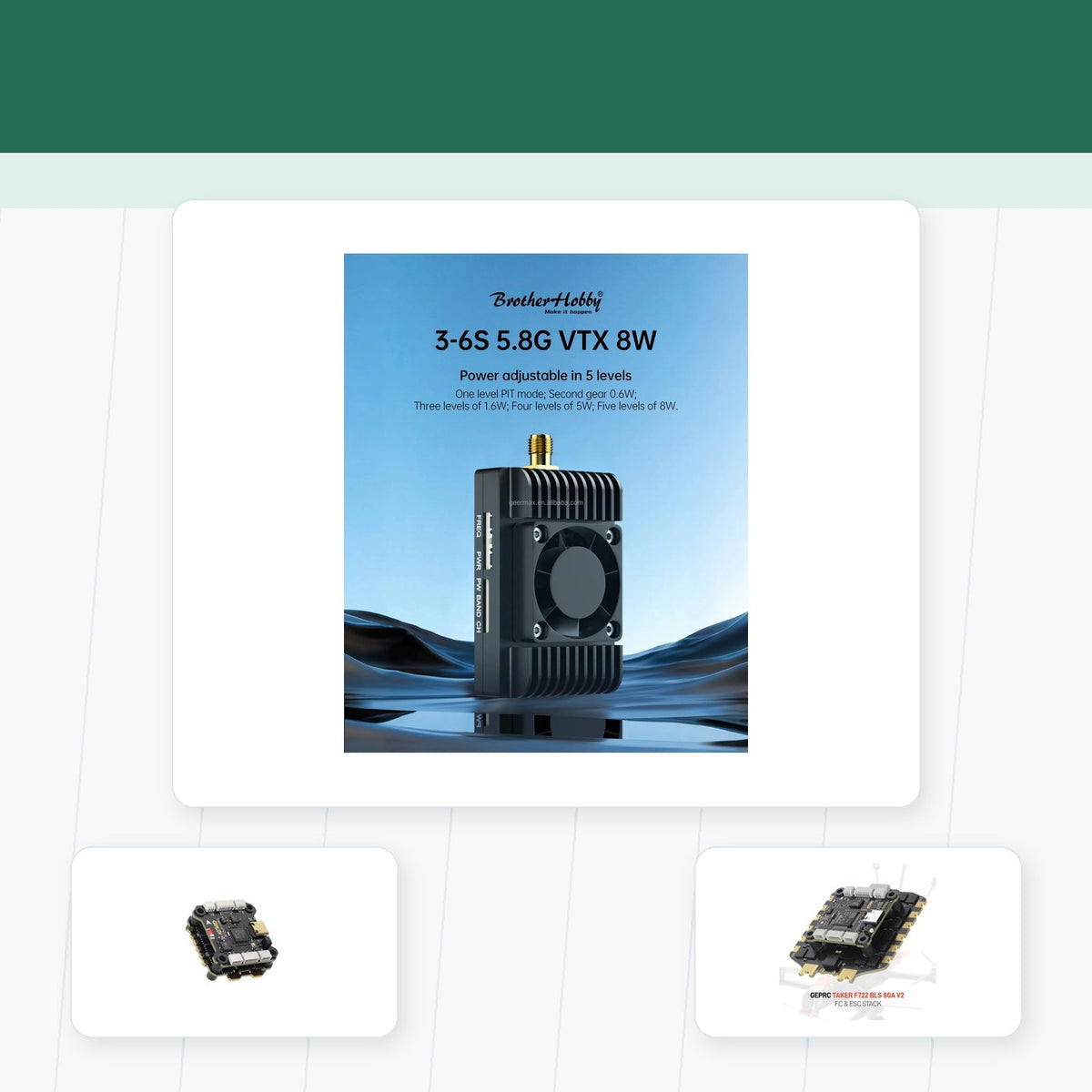
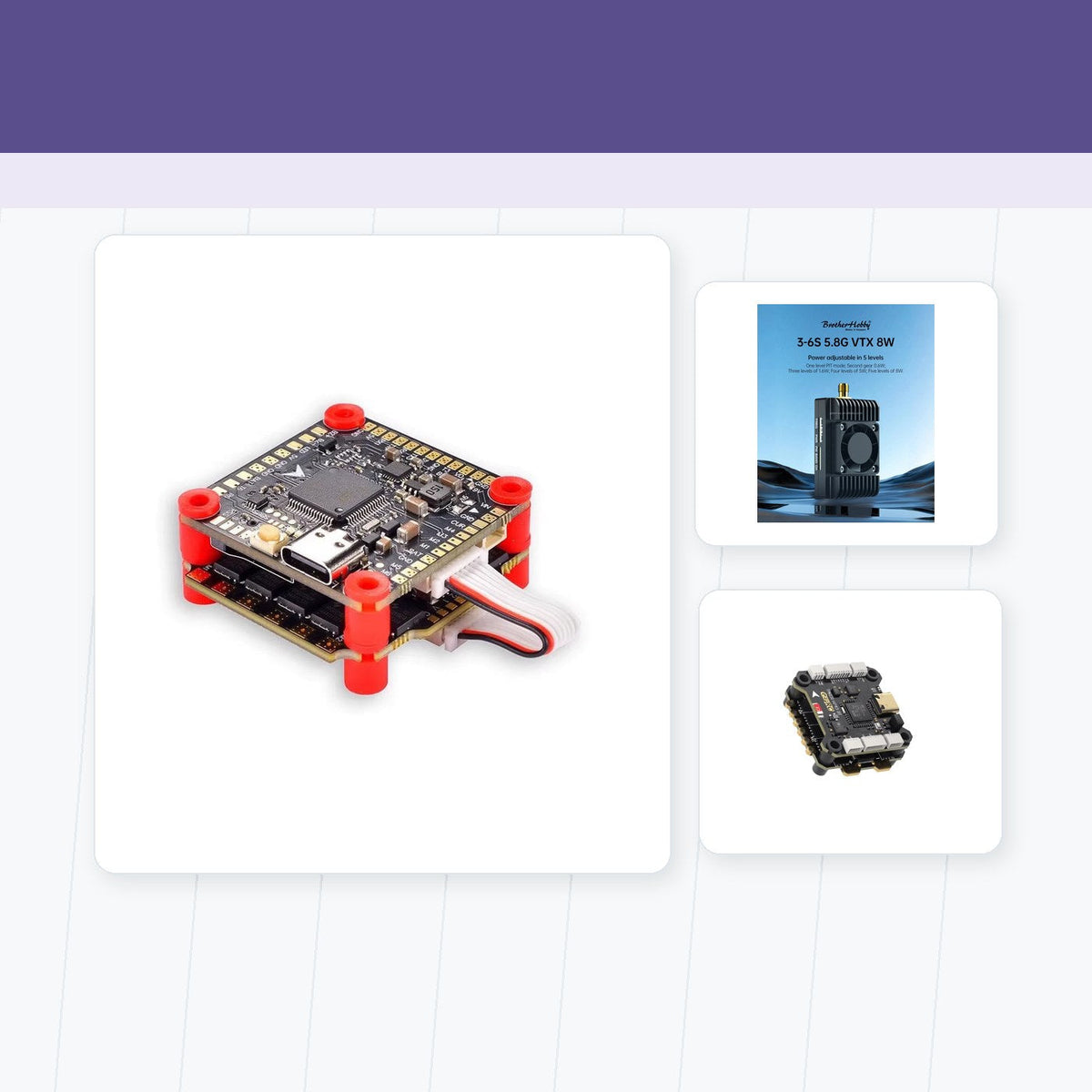
Compare current ratings and integrated options in our FC and ESC stack collection, along with BEC and power-management components.
Share:
RTF/BNF vs DIY FPV Build Kit: Which First FPV Drone Should Beginners Choose?
🚁 Building a new FPV drone? Choosing the right Motor is the most critical step!